Saturday, September 30, 2006

What is for dinner?


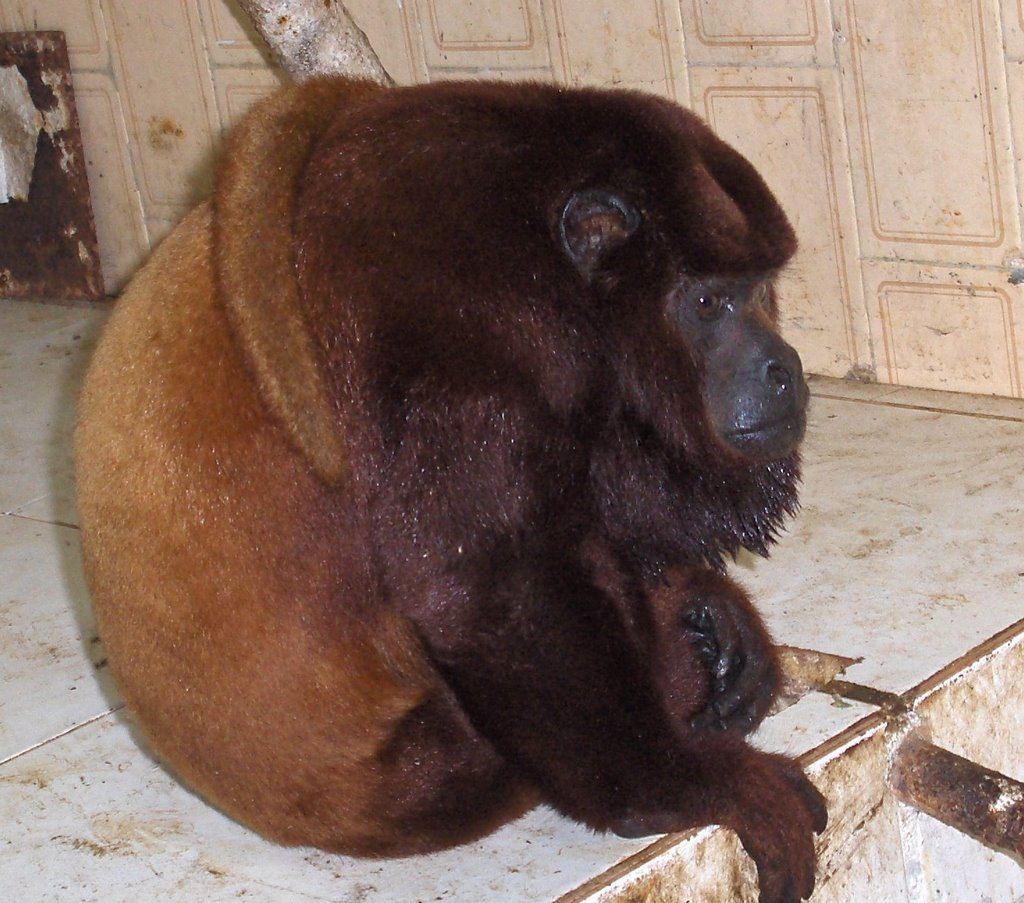
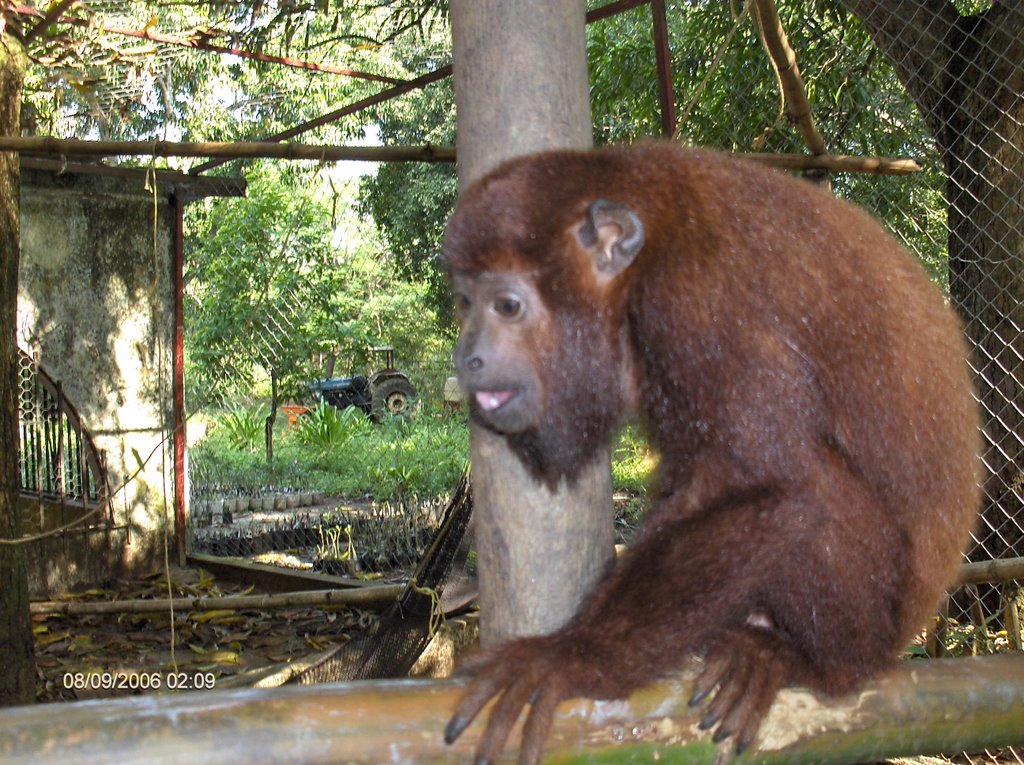
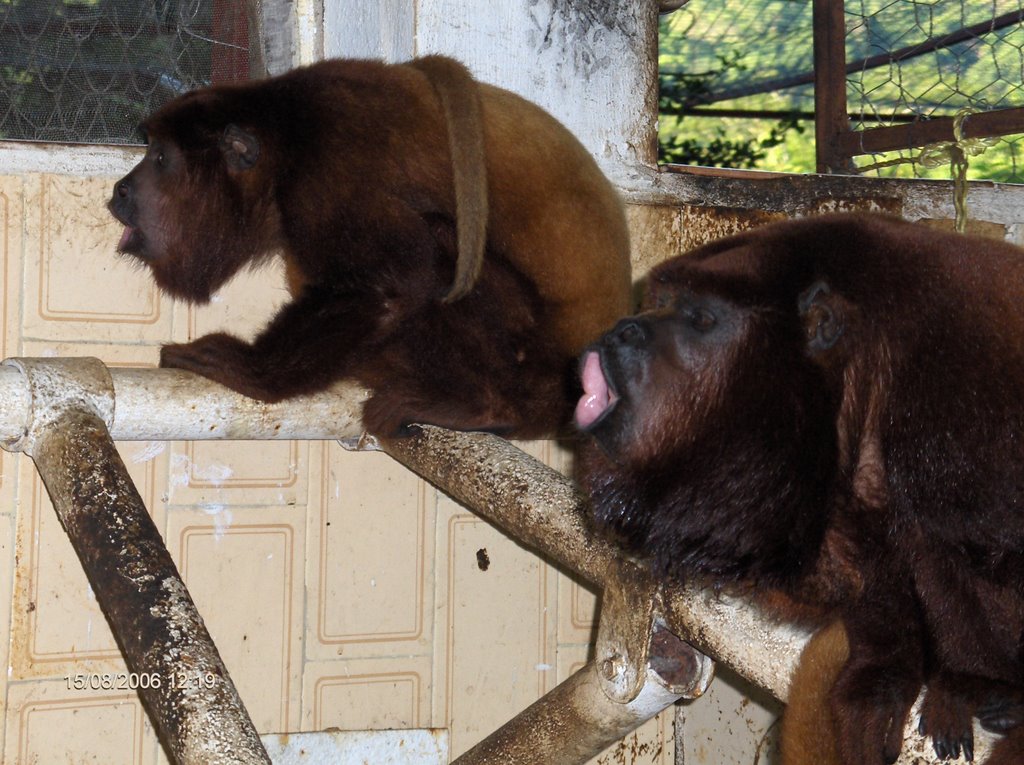
It is just before three in the afternoon at Canaote. The tables have been scrubbed down and the water bowls scoured and replenished. Our picture shows Luis Angel in conversation with Mañiña. Mañiña is anticipating dinner. ‘Why do we have to wait until three thirty for dinner? Why can’t we have it now?’

The meal times at Canaote.We serve dinner at three thirty in the afternoon. Today we have steamed vegetables, apio, carrots, and pumpkin with a large helping of creamed corn. There is a side order of lettuce with a lightly steamed egg.

At eleven, we have a morning snack of fresh leaves, which Luis Angel collects from the forest.

Breakfast is always at exactly seven thirty and is usually fresh fruit and a fortified banana milkshake with added vitamin ‘c’. This morning the fruit is Lechosa (papaya to our non-Venezuelan friends). We cut it longways and leave it in its skin, just the way they love it.
The Lechosa is a very special sweet variety from our own Botanic Garden. The fruit is varied every day, sometimes lightly cooked banana and for a change, occasionally Quaker oats.
This variation in diet is most important and reflects our understanding of the foraging habits of the Howler monkey. More about that in another posting.

Monday, September 25, 2006

The Mad Hatter's Tea Party


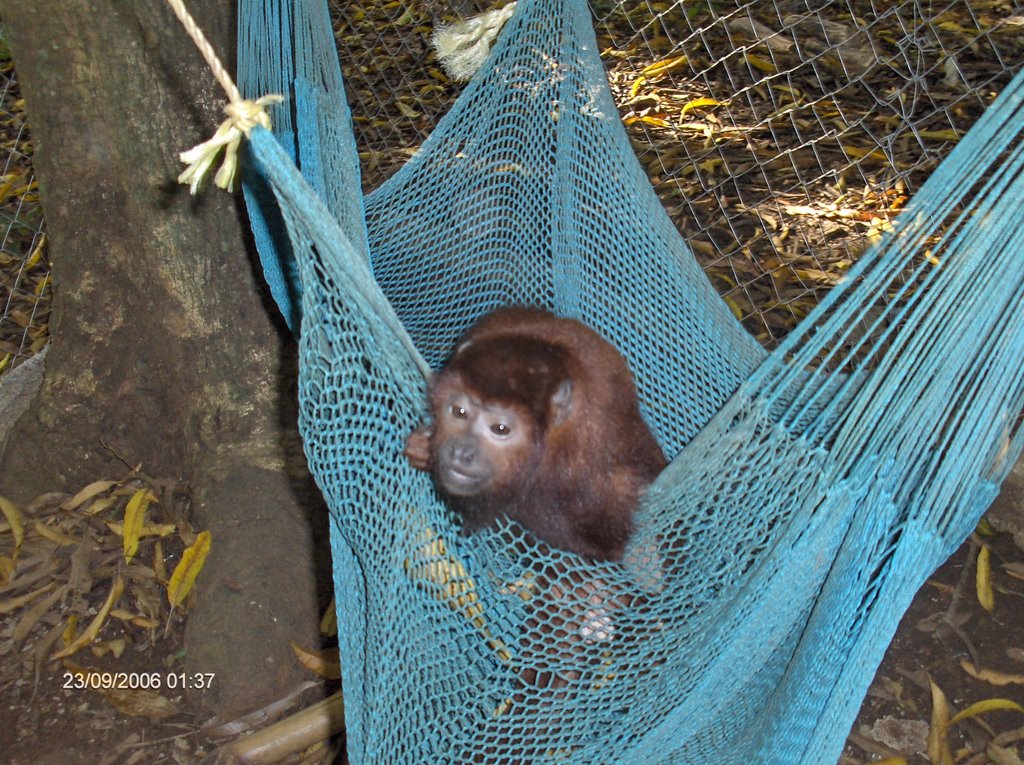
Schatov and Emma are now accustomed to their new more secure home. Our photographs today show them in a rare quiet mood. You will remember that Schatov came to us from his family in Caracas and Emma came from ARFA. It only took a few days, together, before they became great friends and completely devoted to each other. We have built a new home for them, within the high voltage fence and adjoining our house. Their new house is a careful copy of their original home. The only difference is that now there is an access to our house. They enjoy the excursions into our home sometimes in the evening. When they visit, it’s a case of hold on to your dinner plate. Schatov is very outgoing on these trips; he wants to play with everyone. Emma is rather more withdrawn and choosy about her friendships. Mañiña is also in house on these occasions and looks over somewhat nervously at Emma, there is no love lost there. But MonaLisa and Rosita and Imanol are here and they are his special friends. Quite a Mad Hatter’s tea party.

From The Mad hatter's tea party, Alice in Wonderland by Lewis Carroll.

There was a table set out under a tree in front of the house, and the March Hare and the Hatter were having tea at it: a Dormouse was sitting between them, fast asleep, and the other two were using it as a cushion, resting their elbows on it, and talking over its head. `Very uncomfortable for the Dormouse,' thought Alice; `only, as it's asleep, I suppose it doesn't mind.'
The table was a large one, but the three were all crowded together at one corner of it: `No room! No room!' they cried out when they saw Alice coming. `There's plenty of room!' said Alice indignantly, and she sat down in a large arm-chair at one end of the table.
Mad Tea Party
`Have some wine,' the March Hare said in an encouraging tone.
Alice looked all round the table, but there was nothing on it but tea. `I don't see any wine,' she remarked.
`There isn't any,' said the March Hare.
`Then it wasn't very civil of you to offer it,' said Alice angrily.
`It wasn't very civil of you to sit down without being invited,' said the March Hare.
`I didn't know it was your table,' said Alice; `it's laid for a great many more than three.'
`Your hair wants cutting,' said the Hatter. He had been looking at Alice for some time with great curiosity, and this was his first speech.
`You should learn not to make personal remarks,' Alice said with some severity; `it's very rude.'
The Hatter opened his eyes very wide on hearing this; but all he said was, `Why is a raven like a writing-desk?'
`Come, we shall have some fun now!' thought Alice. `I'm glad they've begun asking riddles.--I believe I can guess that,' she added aloud.
`Do you mean that you think you can find out the answer to it?' said the March Hare.
`Exactly so,' said Alice.
`Then you should say what you mean,' the March Hare went on.
`I do,' Alice hastily replied; `at least--at least I mean what I say--that's the same thing, you know.'
`Not the same thing a bit!' said the Hatter. `You might just as well say that "I see what I eat" is the same thing as "I eat what I see"!'

Saturday, September 23, 2006

Look and listen.

I have been reading an article in the ‘New Scientist’ magazine, which reports an important conference, held at the Royal Society in London last week. The conference was concerned with, how animals interpret the world. One thing is clear, they do not see it in the same way that we do. Understanding how they see the world will help us to understand their problems, both physical and mental. Accepting that there is a difference can help us to care for them better.
The first example that the article gives does not have my wholehearted agreement. I quote.
‘Your dog falls ill, so you take him to the vet. After a quick consultation you take him home, and soon he appears to be better. But he is not. You and the vet have failed to realise that he is still in severe pain, and the drugs the vet has prescribed will turn him into a social outcast, a dog that may be shunned or even attacked by others.’
The paper goes on to say that the indiscriminate use of antibiotics can destroy important bacteria that live in its anal sac and produce the individual scent by which it is recognizable to other dogs.

So what don’t I like about this?

The presumption that it is a ‘quick consultation’ seems like salting the mine. Why should quick consultations be a cause?
Why does the dog appear to get better, if he is sick, he is sick?
Why does the writer suppose that we do not recognize that the dog is in pain? Isn’t that why we took the dog to the vet in the first place?
The matter of inappropriate drugs is not a matter of understanding the dogs thinking or suffering as much as an ignorance of the physiology of the dog. Aren’t vets trained in these matters?

This was an unfortunate introduction to the subject, which may have given the impression that the whole subject was being treated in a lightweight manner. This is far from the truth.

Several investigators have developed a list of indications relating to specific animals. Pigs and chickens are given as examples. There were also workers in the field of primates that gave very specific lists of indications that the animal was conveying.
Wiseman-Orr and Reid have designed a simple one-page questionnaire that can be used to evaluate whether a dog is in pain, an approach they say can be used to objectively evaluate the welfare of any animal in any setting. Their latest test monitors the health and welfare of dogs suffering arthritis. A series of 109 questions covering 13 facets of a dog's appearance, behaviour and habits allow a vet to track the progression of the disease and which treatments are working. The idea is to replace subjective assessments with an objective, repeatable system of logging symptoms.

David Morton of the University of Birmingham, UK, is developing a system to help vets and owners decide whether an animal is suffering so much that it ought to be put down. Its ratings weigh signs of physical distress against positive signs, such as a dog wagging its tail, to give a dispassionate measure of how an animal is faring.
Françoise Wemelsfelder of the Scottish Agricultural College in Edinburgh is looking at a different aspect of welfare: developing a way to assess the suitability of the environment in which animals are kept. She asks observers to watch recordings of groups of animals and then choose adjectives that best describe their physical condition, demeanour and behaviour in a particular environments. These "emotional profile descriptors" are placed on a grid according to how positive or negative the words are. Completed grids show clusters of words which reflect the body language of an animal in that environment

I can only praise this seminal work. This is the beginning of a better understanding of the needs of our neighbors.
From my own experience, I can identify a happy Howler monkey, by its vocal expressions and its bodily movements. Equally, their words of distress are also identifiable. Howlers come very close to having a language, which is universal. The same sounds mean the same thing from wherever the Howler monkey has originated.
Their body language is also universal. The puffing up of the fur when in a challenging situation. The forward and backward movement when in attack, testing the will of the other party to fight. The shaking of the head when angry.

There is no dictionary for reference. Maybe someone will get around to writing one.

The substance of the conference was that animals, by their body language as well as verbal indications are able to tell us a great deal, if only we will look and listen

Monday, September 18, 2006

Imanol and Schatov will look just like Totto.


When people buy the cute little bundle of red fur along the roadside, they do not realize that they are buying a time bomb. Totto was once small, like Imanol and Schatov. Imanol is charming and naughty simultaneously. He will throw your phone to the floor and then let out a squeak, which more or less says ‘I didn’t know that was going to happen’, then snuggle up to you and smother you with licks. It makes it impossible to reprimand him. Schatov is mainly interested in what you might have to eat. He can be very patient but his hand can dive into your pocket and in a flash he has run off with what he has found. He also steals hats. Emma and Schatov are an inseparable pair. Where Schatov leads, Emma is never far behind. One day maybe, you guess my thoughts? But for now they are very young.
Totto is big, sullen at times, aggressive if he does not know you. It is difficult to determine his mood if you are not in his circle of friends. He is potentially dangerous if you are not wary. In spite of his very macho attitude, he is courteous and respectful to his wife Sophie. He is not a good Christmas present. However, someone once thought so. Take it from me. All monkeys bite and the bigger they are ……

I have been surprised and pleased at the way Totto has worked with me to make a relationship. I don't think he realises that I have been his match maker. But he does recogise me as a friend and that really is something.

Yes in a few years, Imanol and Schatov will look just like Totto.
In our picture you see Totto posing for the camera and in the second picture, Schatov (left ) facing off with Imanol.

Friday, September 15, 2006

Female, the toughest sex?


We have had no opportunity to blog over the last few days. We have been traveling, seeking a new home for ourselves and our monkeys. This is a difficult task; Canaote is a hard act to follow. We have traveled widely from near Turmero high up in the mountains and just over the hill to Colonia Tovar, to Manrique in Cojedes, seeking a refuge from banditry and theft. Nevertheless, life goes on here. We all have colds. Totto has a bad one but is responding well to treatment. Marco has completely recovered. Curiously, the females, Sophie, Sussy, MonaLisa, Emma, and Rosita have been immune to the infection. What does this tell you about the strength of the sexes?
We returned from our travels with fruit not grown in Cojedes. Our picture today shows Mañiña enjoying a peach. The other is of Schatov, having a quiet moment in his new residence. Because his new home adjoins our main house, some of the newer pictures of Schatov show him visiting us. He is very domesticated and very comfortable in human company. Recently we found him asleep on David’s bed. More of those pictures on a later posting.

Sunday, September 10, 2006

New challenges await us

After I wrote about the bandit attack on Canaote, we were overwhelmed by your response. Every one of our regular readers has written offering practical advice and actual help. What has become clear is that we can no longer remain at Canaote, the place that has been our home and dream for the last twelve years. We will leave behind the work of these years. When I walk through our arboretum and see the rare fruit trees in full fruit after many years of waiting and the magnificent mature Palms, my heart is very heavy. I do not know what will happen to this work of love. Trampled by bulls, torn by machines? I cannot allow my sentiments to stop what must be.
Bandits have attacked us six times now, each time the attack has been more violent and dangerous. This time they threaten to return and kill David and me. Additionally the farm has been systematical striped of its equipment almost on a nightly basic. Our bull weighing equipment, a very large and heavy device, welded into the structure of the coral disappeared in the night just recently as did our electric plant, which was actually, cemented into the ground. These people have no fear of the law and no respect for decency and fair play. We are not rich people and do not understand their obsession with us.

We have received generous offers of land in several fine locations and we will over the next days visit and determine where we will move to.
I want to make it clear that our dedication and commitment to the Howler monkeys remains unchanged. Where I go, they will go with me.
If our commitment is strong, I must tell you that the commitment of our friends is also strong. We will need to construct five large enclosures to house the five pairs of Howlers we have. One friend has already volunteered to build and pay for two of those enclosures.
We will have to face the ergonomics of moving our monkeys; we have been offered help with this task.
It is difficult for me to sufficiently express my gratitude to our friends.

We are being tried but we will not be found wanting. Maybe our work here is complete and now new challenges await us.

Wednesday, September 06, 2006

Paradise lost.


I have always thought that Canaote was a paradise and my mission was to care for the children that were brought to me here. In spite of the events I will now recall, I still believe that.
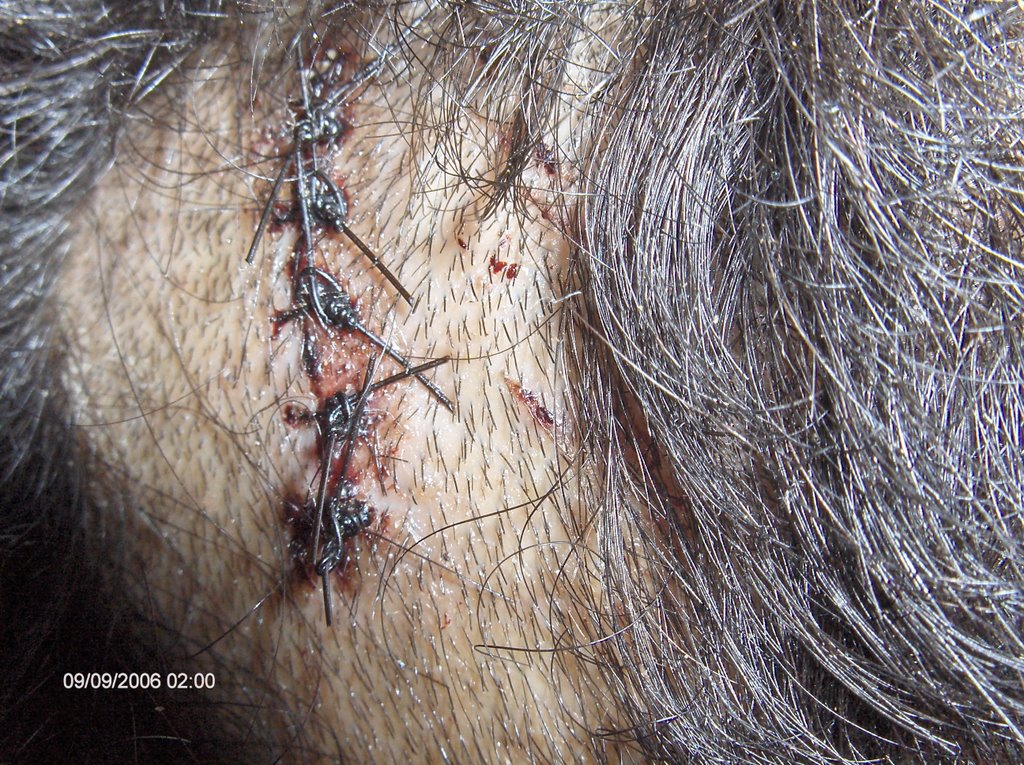
We were attacked by armed bandits again this morning and they held all my staff hostage. This is the 6th time bandits have attacked us here. Young Luis Angel got a very severe blow across the head. The others have been deeply frightened by these people. They stole our old Toyota. The police were about as much use as nothing. Lawlessness has taken over and we live in conditions worse than the Wild West. At least they had Matt Dillon. The long and short of it is, we cannot continue to live here. All my staff without exception have resigned and do not intend to return. The loss of our housekeeper Josephine and Luis Angel is critical
My deep sadness to the people of Venezuela. If you cannot protect the people who love you and want to better and enhance life here, then you enter a new dark age.

My principal concern now is to find another place to live; I have to sell this place of course, as we are not so rich that we can just walk away. I have to find a place where I can erect sufficient enclosures for my 10 monkey children.. That is 5 locations to build.
Maybe our work was finished here. That’s looking at the situation positively. The wages were becoming quite staggering for little or no return. For what we want to do, this farm is just far too big. On selling the place it could be an interesting buy for someone. Perfect grazing for 500 cattle 12 months of the year. It has all the documentation complete required by the new land laws. It could be good for the right people. I am no longer the right people. Any comment you have as a friend would be welcome.
I must say that my commitment to the little red monkeys remains unchanged. I will take them with me wherever I go. I will choose a place suitable for them to be with me. Please have no doubt about my commitment to them.
If you have any suggestions about a location for us to move to, your input will be welcome.
Our horror picture is the five stitches that Luis Angel received on his head wound.

The Malay Apple


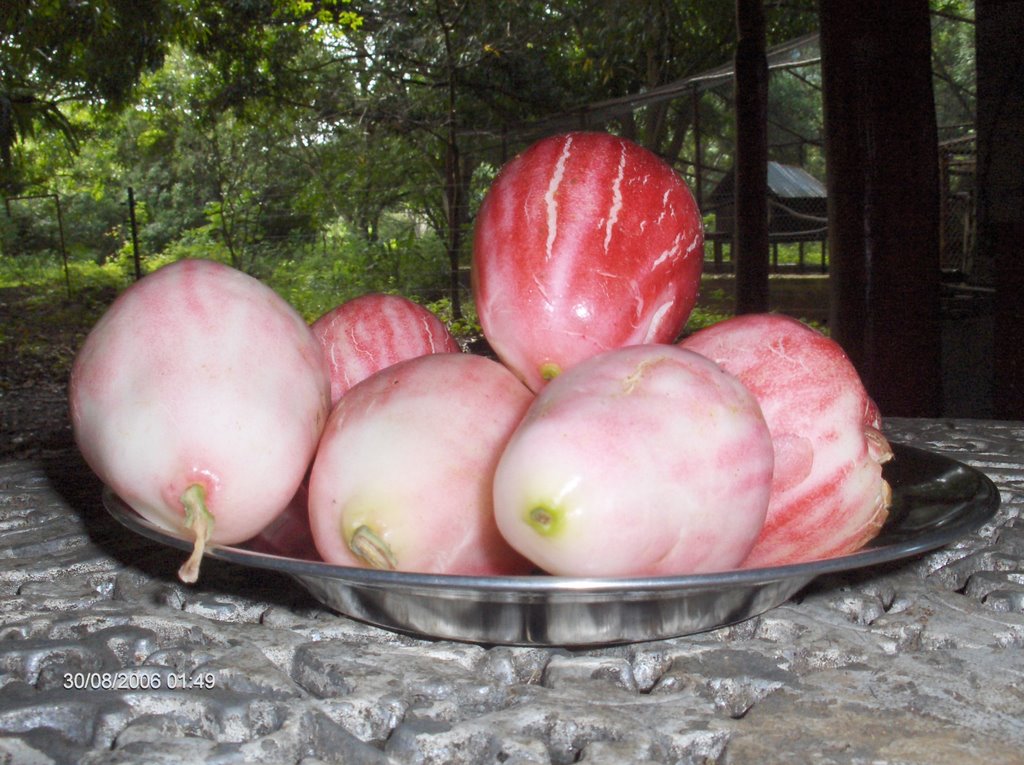
The Malay apple or more correctly Syzygium malaccense is a delight to the eye in every respect. It is admired for the beauty of the tree, its flowers and its colorful, glistening fruits, without parallel in the family Myrtaceae. Here in Venezuela it is called Pomagás. We planted this tree in August 1998 and it is fruiting for us this year for the first time. This is another welcome addition to fruits for Venezuela. The Monkeys love it.
It has the texture of a delicate apple and has a similar flavour. Both white and red wine can be made from its juices.
Pomagás is presumed to be a native of Malaysia. It is commonly cultivated from Java to the Philippines and Vietnam, in Bengal and South India. Portuguese voyagers carried it from Malacca to Goa and from there it was introduced into East Africa. It must have spread throughout the Pacific islands in very early times for it is featured in Fijian mythology. The wood was used by the ancient Hawaiians to make idols. The flowers are considered sacred to Pele, the fiery volcano Goddess.

Tuesday, September 05, 2006

Looking back

When we began to care for howler monkeys, we allowed them to roam freely in the forest. We provided shelter in the roof of our house and two meals a day, breakfast and dinner. At night, they slept in the roof, leaving after breakfast to spend the morning foraging in the high trees of the forest. Midday they returned for siesta, and then they would race off to the forest again until dinner at four in the afternoon. The size of the group varied anything between eight to fifteen individuals. Some chose to leave the group and make off on their own. Some of these children have found partners and live with their families in the nearby forest to this day. There was some loss because of unexplained sickness. We were never able to identify the sickness in spite of expert autopsy at university clinics in Caracas. We do know that it was not Yellow Fever. The one outstanding fact was that animals in enclosures were not affected. This was a forest born disease born by the wild Howlers. Even though we were not aware of any direct contact with wild tribes, the process of ‘marking out’ could easily explain the spread of the sickness. Howlers have an enzyme in their spittle, which they transfer to their beards. The beard they use as a brush to paint the marking point on the tree. This spittle could easily be the reservoir of the disease.
The monkeys that chose to leave the group are more difficult to explain. Anna, one of our early residents, hated other females and caused at least three to leave and find their own place in the forest. We know where they live and often visit them. We do know that they have likes and dislikes of other howlers. This can be surprising. We were sure that Sussy would love Emma when she arrived. Emma was small and baby like and Sussy has been a mother many times. However, the opposite was true; she attacked Emma viciously, resulting in the partial loss of a finger. On the other hand, MonaLisa loves both Imanol and Rosita. She tries to treat them like her own children.
Now as a young adult, Emma attacked Mañiña and he is in fear of her and tried to leave the other day to get away from her. Is this a case of the abused abusing as with humans?

The dynamics have changed because of our decision to keep all the children in large and friendly enclosures. They can no longer leave at will. But that has not stopped this strange dislike that some of them develop to others. This is the reason why we choose partners carefully and make certain that each monkey lives with others that are friendly. Where possible we pair them as husband and wife.

We are often asked, ‘why are your monkeys in cages, why don’t you release them to the forest where they belong?’ From what I have written above, I think you are beginning to see the reason.

One answer lies in the kind of monkey we have here now. In the early days, the howlers came from the forest, having been confiscated by the National Guard from children selling them at the roadside. These wild untamed monkeys had little or no contact with humans. Giving them free range of the forest was not a problem until we began to identify diseases.

All the present permanent residents are from human homes in Caracas and Valencia. They are semi tame. They have special needs that are not answered by the forest. They look for human company and care.

Animals that have been in human company are able to transfer the diseases that they have acquired from humans to their wild friends.
These diseases can then return to the human race through wild animals sold at the roadside or acquired from wild sources. These are the famous Zoonotic diseases, Frequently the disease has been altered and come back with a new strain that humans have not yet encountered. Think of AIDs, Mad Cow disease, Avian Flue just to mention a few that come to mind. This is our main reason for not returning monkeys to the wild.

I have already mentioned that monkeys in enclosures are safe against forest diseases. This is another good reason for housing them in enclosures. It is now five years since we had any problem with health.
Before coming to Canaote some of our children have been sleeping on sofas, covered lovingly with blankets, eating human diet and are frankly not prepared for life in the wild. We try as best we can to give them the comfort that they are used to, but perhaps with a slightly more suitable diet than sardines and spaghetti

When MonaLisa arrived here a few years ago, she had never seen the sky, never felt wind and rain on her face. Never seen let alone climbed a tree and never seen another animal and does not know how to make a baby. She had been living in an apartment in Valencia. Yes, she was loved and well cared for but where was her life? To this day she will only tempt the very low branches of trees. In spite of many opportunities to go with an attractive howler male, she does not identify with them and tries desperately to make love to human males. It is heart breaking to see this.
We try to teach her monkey ways but it is an uphill struggle.

Friday, September 01, 2006

Orchids at Canaote


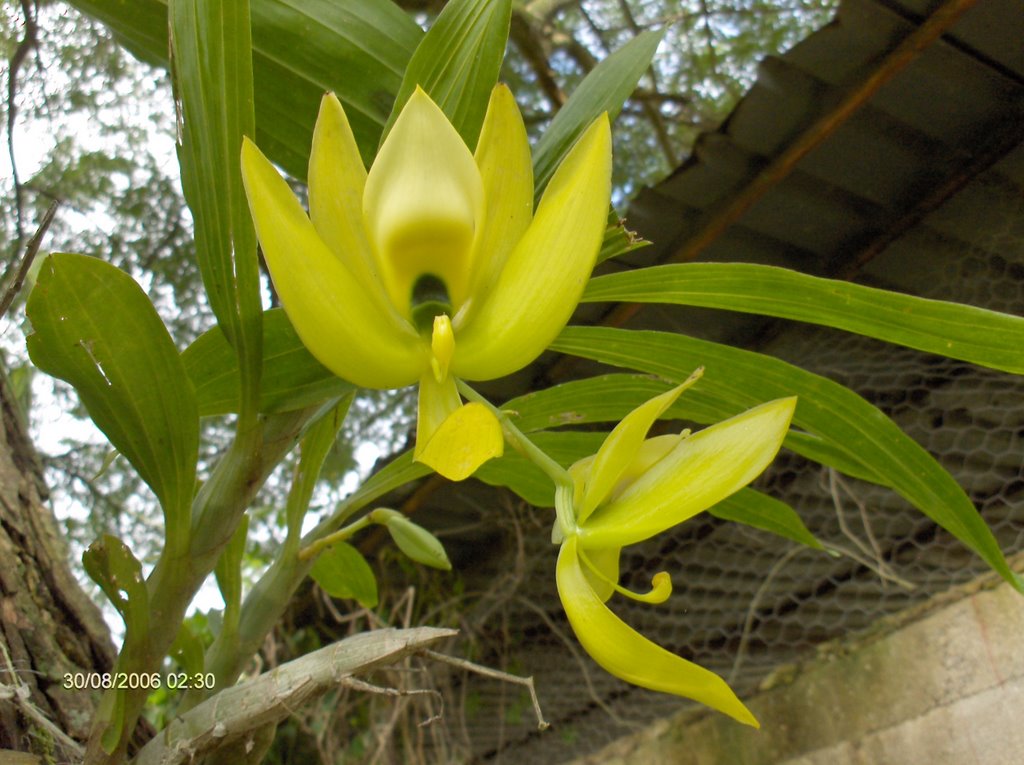
Canaote Botanic garden is home to many rare species of fruit and palms. For many years, we have collected the rare and exotic from our friends around the world by seed and plant exchange.. This is a useful scientific endeavor. We want to identify the plants that will grow well in this xerophytic environment. We have included many vegetables in our plan but this was not the main purpose.

Some things grow here naturally because this is their original home. The orchid Cycnoches chlorochilon sometimes commonly called the Swan Orchid is one of them. Its shape resembles a swan. Some folk think the photograph is upside-down because most orchids are oriented the other way up but the photograph shown here is correct. It was originally discovered near Maracaibo, Venezuela by a certain Herr Moritz, a German living there. Curiously the R.H.S in London do not accredit this orchid as being of Venezuelan origin, they are mistaken. One feature of Cycnoches species was the extraordinary number of seeds in each seed capsule. Numbering 3,770,000 per pod, with each plant producing six to eight pods. If each seed survived, the earth would be buried under these flowers in fifteen years. Luckily, only a few survive in each generation. There are only sixteen species that we know of. The one in our picture appeared here at Canaote in that location naturally. It is mildly perfumed. We are thrilled to have it here.

Wednesday, August 30, 2006

Every cloud has a silver lining


Yesterday was a bad day. Just about everything that could go wrong did.
Because of the heavy rains, the local rivers, which cross the roads here, were swollen and impassable on foot or bike. Our staff come from a village some eight kilometers beyond Canaote and need to ford three rivers. The result was that none of them arrived for work. This left me with the heavy chore of cleaning six enclosures, and preparing breakfast and dinner for our ten children. I must say this is no mean task. This is not to mention the chickens, a turkey and six dogs, two macaws and a green parrot.

The second disaster occurred at about three o’clock in the afternoon when I discovered that Mañiña was not in his enclosure. He had gone walkies and was nowhere to be found. This was my main anxiety over the next fourteen hours. All night I was awake least I should hear him on the roof or trying to get back into the house.
The next event was a call from William my driver. He had been arrested and taken to the local police station, charged with receiving and handling a shotgun without proper documentation. Strangely, he had just finished his negotiation for the gun and paid for it, when a police officer arrived on a motorbike and said ‘allo, ‘allo what’s all this. William complains that the whole scene was complicity. This was shortly resolved in Venezuelan style, by me over the telephone. No charges and the gun was properly documented in any case, and that is the end of the matter.

At about three thirty, I took dinner around to the children. Imanol followed me without being noticed. I opened Totto’s door, and entered, Sophie was looking under the door, she suspected that there was another monkey outside. She was right. Sophie suddenly rushed past me, intent on attacking Imanol. Just in time, I scooped him up and held him safely in my arms but not in time to prevent Sophie from escaping. She spent the next two hours in the high trees racing around the canopy like a wild thing. I enjoyed watching her jump from high branch to high branch, she is very skilled. One thing you have to know about Sophie is that she loves bananas. I took a large banana from the kitchen and offered it to Sussy. This was too much for Sophie and she came down from the tree tops get her share. And so to bed for Sophie but not before Totto had given her a clip behind the ear for deserting him.
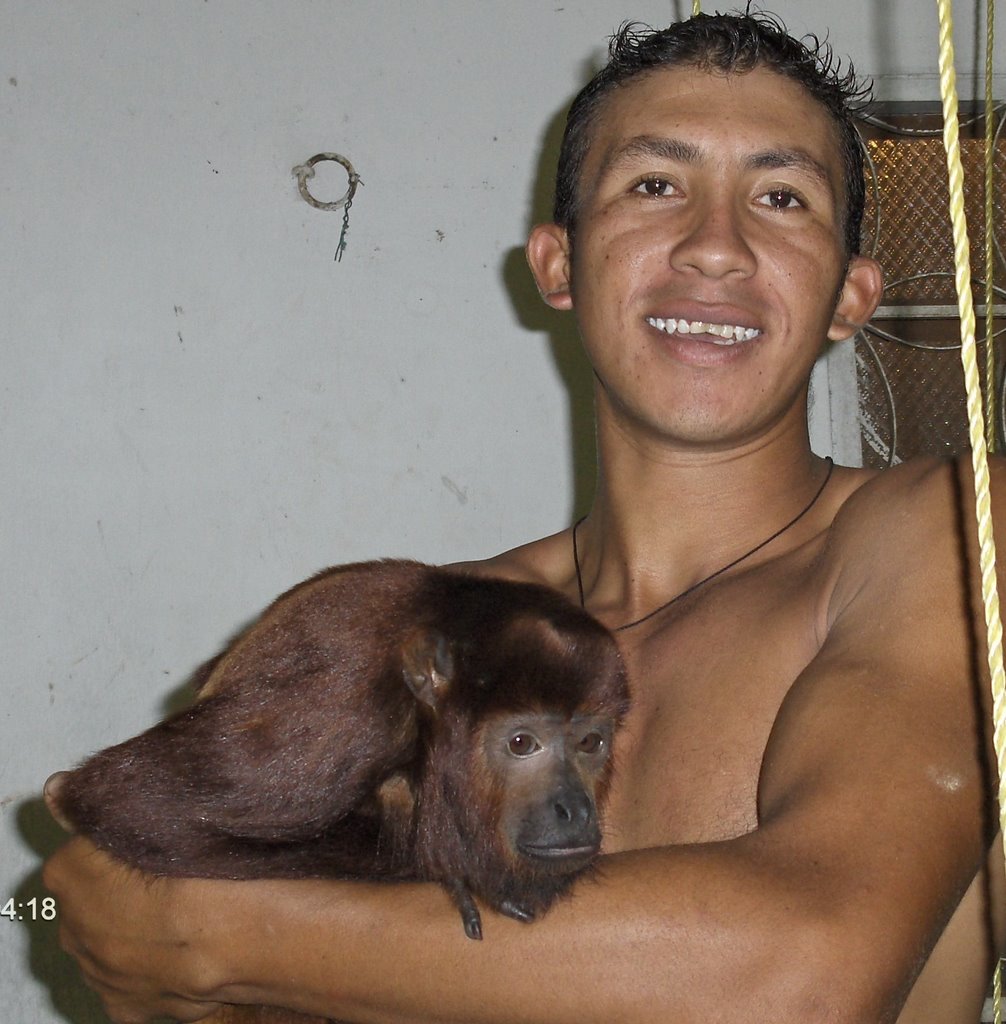
At seven the next morning, Dennis one of the staff, arrived with Mañiña in his arms. Curiously, he found him in exactly the same spot where Imanol had been found a few days before, hiding among the plants in the greenhouse. I just could not bring myself to believe that Mañiña would desert me, after the good relationship we have formed. He knows that I care for him and that he is loved and wanted here. He was relieved and happy to be back in my arms and very hungry. Of course, we have had a post mortem, why did he want to leave? We discovered that he had an quarrel with Emma, with whom he is sharing. She can be argumentative and has eyes only for Schatov. He was trying to get away from her. We have divided the enclosure as a temporary measure, so that he has access to my room at night but separate from Emma and Schatov. Emma and Schatov occupy Chateau Schatov. We will make a more permanent arrangement later in the week. More about the social attitudes among howlers in another posting.

Well everything had a happy conclusion, everyone is safe and well, and it shows that even a very bad day can turn out well in the end.

Our picture shows Dennis, and Mañiña just returned from his trip and very glad to be back home.
I also have some good shots of fruit and orchids here at Canaote. All coming soon.

Sunday, August 27, 2006

Murder most foul


Pablo the Pavo killed Tweety Pie the green parrot last night.
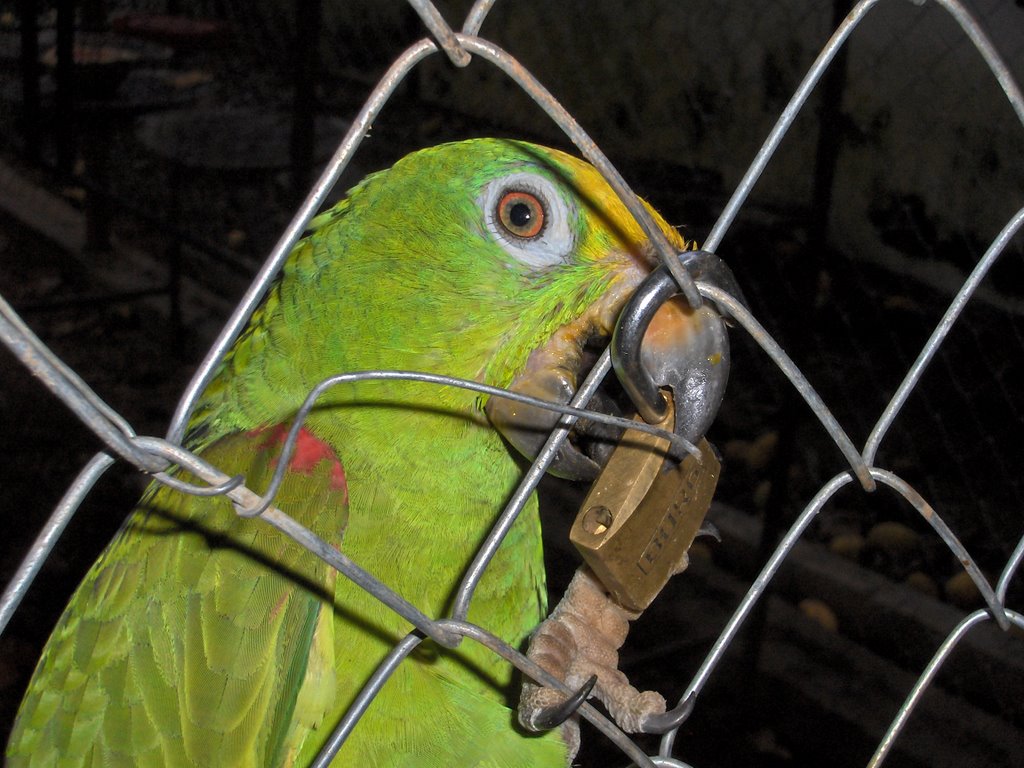
Two young macaws, two green parrots and a male turkey have lived, harmoniously, in the large tall enclosure in front of our house for two years. Until recently, and for six months, they also had four capuchin monkeys as guests. Pablo has always kept himself aloof from the others. However, we have never seen any sign of animosity between any of them. Last night at about five o’clock, I heard loud and urgent squawking. I rushed outside and saw Tweety Pie lying on her back with Pablo biting her chest and neck. Tweety Pie was in a bad way. She died in my arms a few hours later in spite of our aid. It is difficult to say what started the attack. It is possible that it was about food. But whatever, it was unexpected. Tweety Pie and her mate, Thomas were a loving and inseparable pair. Both were talkative and friendly. Tweety Pie was a star because she mimicked our housekeeper perfectly and this caused great amusement. One of the most memorable things was her ability to open padlocks. At one time, I named her 'chief of the escape committee'. Tweety Pie will be missed and not only by Thomas.
We have moved Pablo to other quarters.
Our photographs show Pablo being motherly to some eight-day-old chicks and Tweety Pie working on a padlock.

Friday, August 25, 2006

A new Chateau Schatov


Just to show we have not been sitting on our fingers, here is a photograph of a new house that we have built for Schatov and Emma. It was completed only a few days ago. They are now sharing with Mañiña and to make them really feel at home, we have duplicated their house. What you see is a new house in the enclosure next to the farm main building. Mañiña is still not too sure about his new companions but he is curious and not unfriendly. We have moved them to address some security concerns.

Our other picture gives us great satisfaction. Some years ago, we were given two macaws. A boy, named ‘Pieces of eight’, after the famous pirate (in the picture) and a girl named Sally. They have lived at liberty with us for many years. One day they disappeared and we saw nothing of them for four months. We thought the worse; that they had been captured for sale. We were wrong because when they returned, they had two young ones. They remained in the area of the farm until yet again they disappeared and returned with yet another two children. That is now six macaws at liberty in our immediate area. This is in addition, to the two very young ones that we are nurturing. We have succeeded in re populating this area with macaws. It is unfortunate that these birds are the prey of villains who capture them for sale. They bring a very high price in some quarters. They are a magnificent sight when you see a family of them in flight.

Sunday, August 20, 2006

Totto and Sophie in the morning chorus..


At first sight, I was sure that Totto was going to be a problem. We arranged a large enclosure for him. Literally, a house and garden. We converted our unused cheese room into a house and added an extensive enclosed garden. The garden already contained a large mature Calabash tree, famous for making maracas. (Cresenta cujete). The entrance to the garden is through a doorway that we built in one of the windows.
He was very aggressive when he first arrived and made it clear that he wanted nothing to do with Canaote. Fortunately, he decided to avoid us whenever we entered his house. He would leave through the garden door, leaving us free to houseclean and provide food.
In the two months, that he has been here the situation has changed. His natural curiosity has overcome his aggression and he now has more confidence in us. He now greets us by rolling over on his back, in a sign that tells us that he has no aggressive intention. He knows that I often have a tidbit of one of his favorite munches in my hand.
In a previous posting, I reported on the experimental introduction of Sophie into his life. She is a mature adult and needs male attention. The initial meeting went quite badly but as time past, they have become good friends. They now sleep, eat and share the facilities of the garden together. I feel confident that they will be a successful pair. You will remember that MonaLisa adopted Sophie when she was very tiny. Sophie would still like to go home to mum but there comes a time in every girls life when she must leave home and give her loyalty to her husband. It will be interesting to see if this union will make changes in Totto's attitudes.
Where possible we try to pair our monkeys, to give them the dignity of parenthood. The very thing that was taken away from them when they were sold at the roadside.

Our photograph shows them together in full voice in the morning chorus.

Saturday, August 19, 2006

The little boy that Santa Claus forgot


I have written about Marco before but always about his relationship with Sussy. I have written very little just about him. He arrived at Canaote in December 2003. The police, who had confiscated him from children trying to sell him on the roadside, handed him to us. If people just realized when they buy monkeys in the street that the mother has been shot, to make this sale possible. The more you buy the more helpless animals will meet this fate.
At that time, he weighed only 500 grams. Sussy adopted him and when he was small, she carried him about on her back. Sussy treats him like her own and they are inseparable. However, he is now over 4 kilos and not a baby anymore. He is very athletic, he plays on the ropes and swing in his garden all day until late. When visitors see his size and discover that he is only about two and a half years old, they are often incredulous. He is a character, he wants you to join in his games, and to make sure that you do not leave too soon he often snatches a hat or other available possession. Marco is an expert pickpocket. He is friendly but not cuddly. You won’t find him sitting on your shoulder or in your arms. He is after all an alpha male. I have watched him develop from a toddler to adulthood. I heard his first thin pathetic morning calls change into the full-throated deep and vibrant call he demonstrates today. A bit of a joker, yes but he has all the proud bearing of a leader. Male alphas are aggressive to other younger monkeys. Particularly if they are not his brood. I have never observed that attitude in him. Quite the contrary, I often see his invitation to join in the game.
He is loved and respected by all the staff here. I don’t have favorites but if I did…
He has no visitors that come specially to see him. No e-mail enquires. No phone calls to ask after his heath. Who needs toys anyway? Having said that, he is not lonely and most days he really enjoys himself.

In our picture you see him eating a Santol, a fruit from Malaysia. Quite rare here in Venzuela, our trees are probably the only ones in this country and they are growing and fruiting happily in our Botantic Garden. The children have lots of rare treats from the large collection of fruits we have from around the tropical world.

Christmas comes but once a year for ev'ry girl and boy,
The laughter and the joy they find in each toy.
I'll tell you of a little boy who lives across the way;
This little feller's Christmas is just another day.

He's the little boy that Santa Claus forgot,
And goodness knows he didn't want a lot.
He sent a note to Santa for some soldiers and a drum;
It broke his little heart when he found Santa hadn't come.

In the street, he envies all those lucky boys,
Then wanders home to last year's broken toys.
I'm so sorry for that laddie;
He hasn't got a daddy,
The little boy that Santa Claus forgot.

Thursday, August 17, 2006

commenting and trackback have been added to this blog.

Toddy for Mañiña


On Sunday, Mañiña received a visit from his family and friends. It was a great day for him and he was thrilled to be reunited with them, even if it was for only a few hours. We welcome visitors and it does the animals no harm. I was reminded of what I had been told by the family about Mañiña’s habits. They told me that he likes a cup of Toddy in the evening. Well I haven’t been giving him this, I was worried about the amount of sugar in this drink and the fat content. Not to be defeated, our picture shows him making a cup for himself.

Saturday, August 12, 2006

Not a dry eye in the house.


Rosita has lost no time in looking around for a boy friend. She has been showing an interest in Mañiña for some days now. Last night she was content to sleep in his arms rather than straddled around my neck. She really is developing at an extraordinary rate. Only a few short weeks ago, her legs were little spindles, I thought scarcely able to support her weight. Now they are quite chunky. She becomes more adventurous and precocious every day, with forages around the house and garden. I did not expect her to develop this quickly. Tomorrow we will take her to a small trees in the garden. Let see how she behaves as a real monkey.

Mañiña knows that his human family will visit him tomorrow. He is excited tonight.You told me he likes Toddy but more about that tomorow.

I suppose it is time to mention that many of our children have human friends that care and either enquire frequently or visit. However, we do have a number of children with no one to care except me and Louis Angel, the carer, here.

MonaLisa, brought here in October three years ago then forgotten, not one enquiry in that time. One of Christmas's forgotten toys. Tragic because she is the loveliest and sweetest natured Howler lady in the world.

Marco, Young and hansom young adult. Naughty at times (watch your hat) but lovable and very intelligent.

Sophie, a waif brought here and abandoned, no one enquires or brings her gifts. She has a pretty face and has lived here since she was tiny. Again she is intelligent and is loving. Likes riding a bicycle and loves her photograph being taken.

Emma, has a few carer friends from ARFA. (Unfortunately they have all moved away). Otherwise she has been abandoned. I fell in love with her long before she came to live with us. When she was still at ARFA, I visited her often. She is exceptional in that she walks on two legs, and is the constant loving companion of Schatov. She has an expressive manner. She lets you know if she likes you. She has a wonderful nature.

I could tell you so much more about each of these children. But better adopt one of them as your special friend. (Human Special Friend, HSF). What does that involve? Not much. Enquire after her/him. Visit. Send a gift of what ever you can afford, or any one or all of those things. Heavy? Yes a little but love is like that. I cannot think about them with dry eyes, can you?
Picture Mañiña giving Rosita a cuddle.

Thursday, August 10, 2006

Who told you Howlers do not smile?


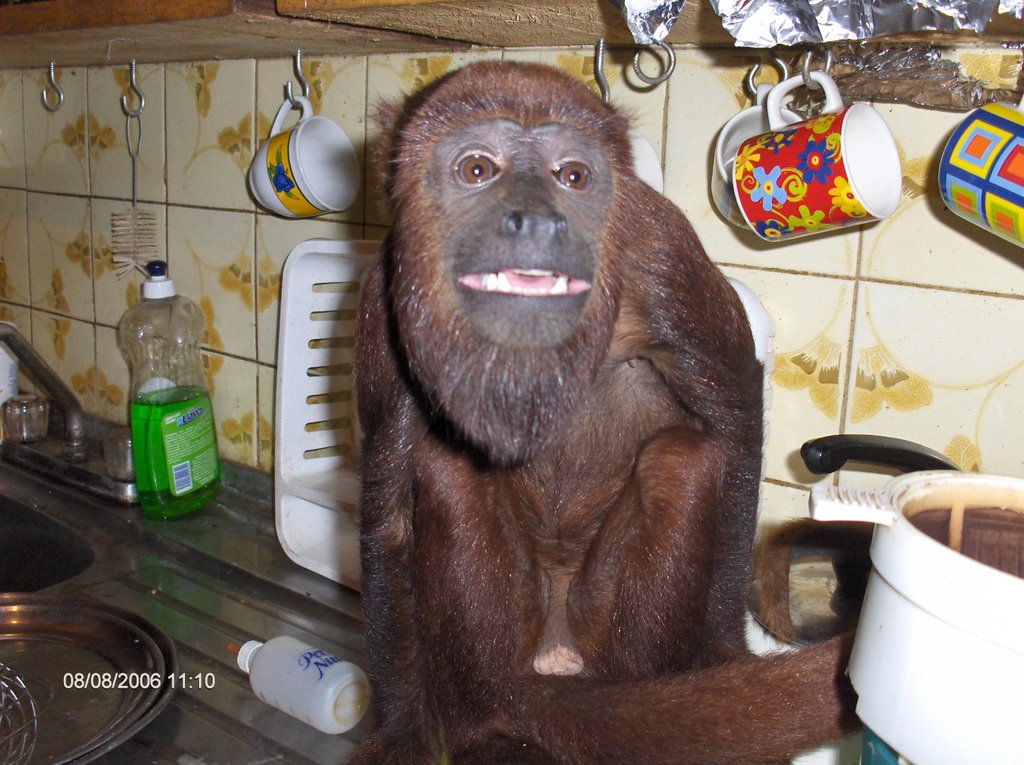
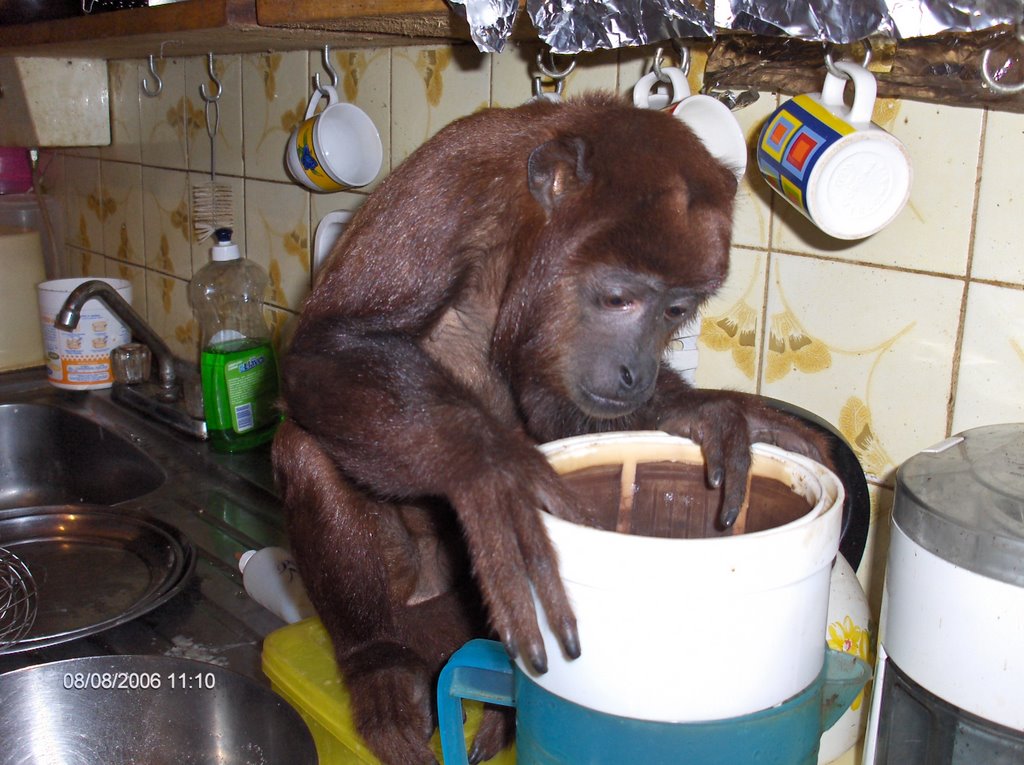
Yes it's Mañiña in the kitchen again, with a broad grin. He has found the coffee pot and has just helped himself to a cup. (not too hot).

Wednesday, August 09, 2006

Who is for coffee?


A few days ago we had intruders during the night. They entered Schatov’s garden and then left without doing any harm, except that they left the doors open. I cannot imagine what they though that they would find in a monkey house. Maybe they were looking for a sack to carry away their meager booty. Anyway, in the morning, Emma went out through the open door and when I first saw her at about 6.30 AM, she was enjoying herself in the high trees. She was eating leaves and making very happy noises. During this time, Schatov sat calmly on one of his pedestals enjoying the fun. Well it doesn’t take much effort to get Emma back into the enclosure. I just offered her a banana and she came down at once. We have now taken extra precautions and padlock the outer enclosure door every night. However, I am certain that this was just a one off event, not to be repeated. Most people are frightened of Araguatos even the small ones. In addition, there was nothing there to steal.

We have a helper in the kitchen every night now and my photograph tells you the story. Typhoo the tea people, advertise internationally with a chimpanzee tea party but how many people know that Howlers actually love coffee? Mañiña, in common with most Howlers, loves coffee. You see him checking out the quality of the Pantin Coffee, I don't know the commercial name but I think he should be on the advertising pay role. Even his color is that of a rich blend. We just have too many photographs of his games in the kitchen to show tonight.
Lots of news about Mañiña,Imanol and Rosita soon.
And what about that snake in the grass?
Totto and Sophie, a wedding to be announced?
Loads of hot news so keep connected.
Schatov is looking up at Emma in the trees above him; he is a little worried by her exuberance. See our story above.
Schatov left, Mañiña right.